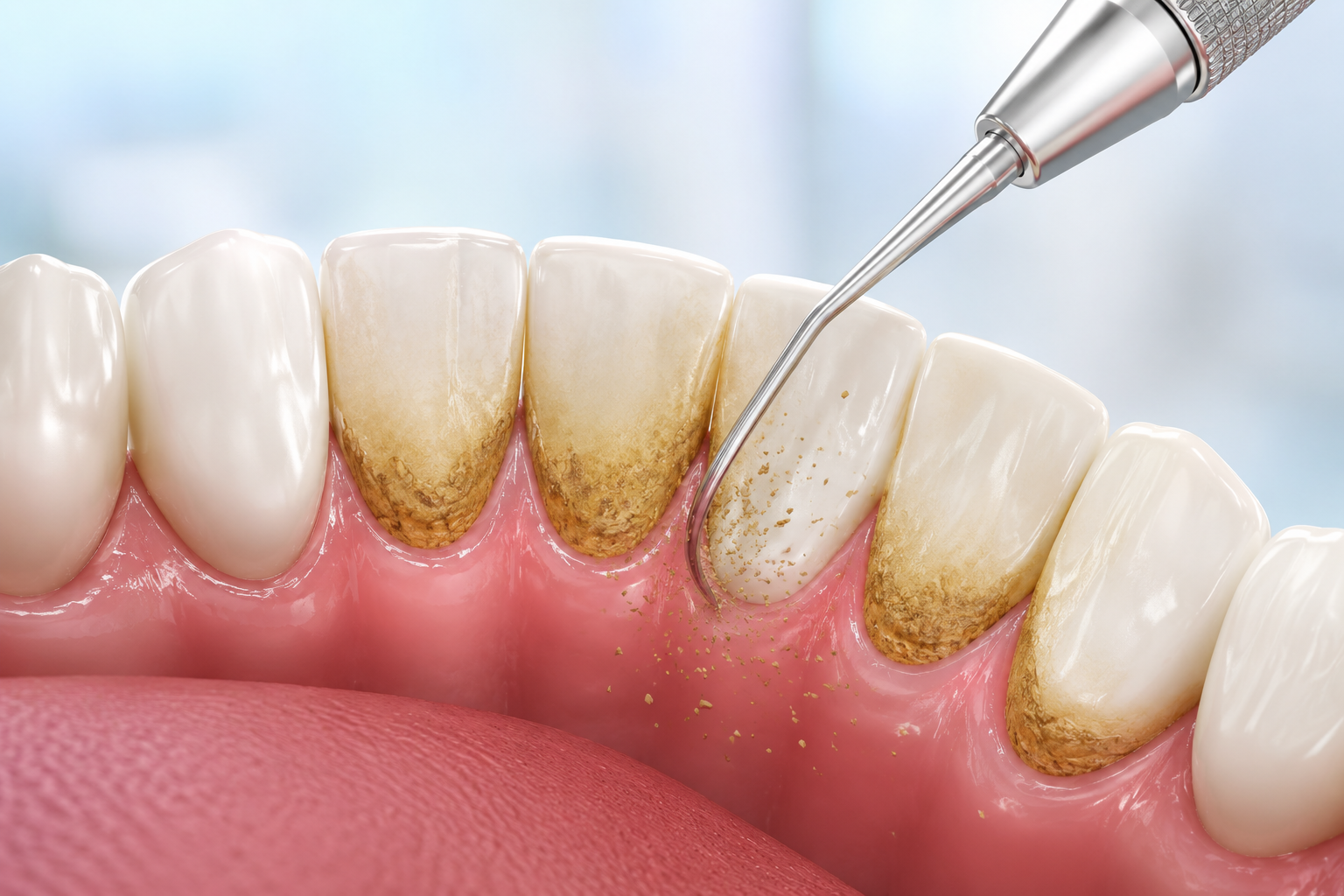
A healthy smile starts with good oral hygiene, but even people who brush and floss regularly can develop hardened deposits on their teeth. Learning how to remove tartar from teeth can help you understand the difference between daily plaque control and professional dental care. Tartar, also called dental calculus, forms when plaque hardens on the surface of the teeth. Once it develops, regular brushing cannot fully remove it.
Although tartar may seem like a minor cosmetic concern, it can create bigger problems when left untreated. It can collect along the gumline and make it easier for harmful bacteria to remain in the mouth. Over time, this buildup may contribute to gum inflammation, bad breath, cavities, and gum disease. Fortunately, professional dental cleaning can safely remove hardened tartar. At the same time, good daily habits can reduce the amount of new plaque that forms. Therefore, understanding the right approach can help protect your teeth and gums for years to come.
What Is Tartar and How Does It Form?
Before learning how to remove tartar from teeth, it helps to understand how tartar develops. Plaque is a sticky film of bacteria that constantly forms on teeth. When you eat, bacteria in your mouth interact with food particles and produce acids that can harm tooth enamel. Brushing and flossing regularly help remove plaque before it hardens. However, plaque that remains on the teeth can absorb minerals from saliva. Over time, it becomes hard and calcified. This hardened material is known as tartar or calculus.
Tartar can appear yellow, brown, or darker in color, especially when it develops below or near the gumline. Furthermore, its rough surface can attract even more plaque, which may create a cycle of buildup. Unlike soft plaque, tartar cannot be removed completely with a regular toothbrush. As a result, professional dental cleaning becomes important when significant buildup occurs.
Why You Should Remove Tartar From Teeth
Knowing how to remove tartar from teeth matters because untreated buildup can affect more than the appearance of your smile. Tartar creates a rough surface where bacteria can collect more easily. As a result, the gums may become red, swollen, or tender. Some people may also notice bleeding while brushing or flossing. These symptoms can indicate early gum inflammation, commonly known as gingivitis.
Without proper care, gingivitis can progress to more serious gum disease. Advanced gum disease can damage the tissues and bone that support the teeth. Tartar may also contribute to persistent bad breath. Therefore, removing existing buildup and preventing new deposits can support better oral health and fresher breath.
Can You Remove Tartar at Home?
Many people search for ways to remove tartar from teeth at home. However, it is important to understand that hardened tartar cannot be safely scraped away with ordinary household tools. Some online sources recommend using sharp objects or metal instruments to remove calculus. However, attempting this yourself can scratch the enamel, damage the gums, or cause an injury.
Instead, focus on preventing additional buildup through consistent oral hygiene. Brushing twice a day with fluoride toothpaste helps remove plaque before it hardens. Flossing also cleans areas between the teeth that a toothbrush cannot reach. Additionally, an antibacterial mouthwash may help reduce bacteria, although it does not replace brushing and flossing.
When tartar has already formed, a dental professional should remove it using specialized instruments.

How Dentists Safely Remove Tartar
Professional dental cleaning is the safest way to remove tartar from teeth. During a routine cleaning, a dental hygienist uses specialized instruments to gently remove hardened deposits from the tooth surface. The process is called scaling. It may involve manual instruments or ultrasonic devices that use vibrations and water to loosen and remove calculus.
After scaling, the teeth are usually polished to remove surface stains and create a smoother surface. This can make it more difficult for plaque to stick to the teeth. Depending on the amount of buildup, the dentist or hygienist may recommend a routine cleaning or a deeper cleaning. Patients with gum disease may require additional treatment below the gumline. Professional cleaning is generally safe and effective. However, people with significant tartar buildup may experience temporary sensitivity afterward.
The Difference Between Plaque and Tartar
Plaque and tartar are closely connected, but they are not the same thing. Plaque is soft and sticky. Therefore, regular brushing and flossing can remove it effectively. Tartar, on the other hand, forms when plaque hardens. Once it becomes calculus, brushing alone cannot remove it.
This difference explains why daily oral hygiene is so important. Removing plaque early helps prevent it from turning into stubborn tartar. However, even people with excellent oral hygiene may develop some calculus. Saliva chemistry, genetics, diet, and the position of the teeth can all influence how quickly tartar forms. Regular dental visits allow professionals to identify and remove buildup before it causes more serious problems.
How Brushing Helps Prevent Tartar Buildup
Although brushing cannot remove hardened tartar, it remains one of the best ways to prevent new deposits. Brush your teeth twice a day using a soft-bristled toothbrush and fluoride toothpaste. Hold the brush at a slight angle toward the gumline. Then, use gentle circular motions to clean the outer, inner, and chewing surfaces of each tooth. Avoid brushing too aggressively. Hard pressure can irritate the gums and gradually wear down enamel.
An electric toothbrush may help some people clean more effectively, especially those who struggle with brushing technique. However, proper technique and consistency matter more than the type of toothbrush. Replace your toothbrush or brush head regularly, particularly when the bristles become worn.
Why Flossing Matters for Tartar Prevention
Brushing cleans the visible surfaces of the teeth, but it cannot fully clean the tight spaces between them. Therefore, flossing plays an important role in preventing plaque buildup. Dental floss removes food particles and plaque from areas that toothbrush bristles cannot reach. As a result, it reduces the chance of plaque hardening into tartar between the teeth.
Floss gently between each tooth and curve the floss around the side of the tooth. Avoid snapping it against the gums because this can cause irritation. People who find traditional floss difficult to use may consider alternatives such as interdental brushes or water flossers. A dentist can recommend the most suitable option based on individual needs.
Foods and Habits That May Affect Tartar
Diet can influence oral health, although tartar formation depends on several factors. Sugary and starchy foods can provide fuel for bacteria that contribute to plaque formation. Therefore, limiting frequent sugary snacks can support better dental health. Drinking water throughout the day also helps wash away food particles and supports saliva production.
Smoking and tobacco use can increase the risk of gum disease and may contribute to staining and other oral health problems. Quitting tobacco can significantly benefit both oral and overall health. Additionally, regular dental checkups help identify problems early. Professional cleanings can remove tartar that daily brushing cannot reach.
Signs You May Need Professional Tartar Removal
Several signs may indicate that it is time to schedule a dental appointment. Visible yellow or brown deposits around the gumline are one common warning sign. Bleeding gums can also signal inflammation. Similarly, persistent bad breath, swollen gums, or increased tooth sensitivity may require professional evaluation.
Loose teeth or gums that appear to pull away from the teeth can indicate advanced gum problems. In these cases, prompt dental care becomes especially important. Rather than trying to scrape away the buildup yourself, arrange an examination with a dentist or dental hygienist. Professional care can identify the cause and provide the appropriate treatment.
How Often Should You Have Your Teeth Professionally Cleaned?
The ideal cleaning schedule varies from person to person. Many people benefit from professional dental cleanings every six months. However, individuals with gum disease or a higher risk of tartar buildup may need more frequent appointments. Your dentist can recommend a schedule based on your oral health, medical history, hygiene habits, and tartar formation.
Regular visits also provide an opportunity to identify cavities, gum disease, enamel damage, and other concerns at an early stage. Keeping these appointments can save time and discomfort in the future because early treatment is often simpler than treating advanced dental problems.
Keeping Tartar from Coming Back
Once a professional removes tartar, daily habits become essential for preventing it from returning. Brush twice a day, floss consistently, and attend recommended dental appointments. Also, pay attention to the gumline because plaque often collects there. Use gentle brushing techniques rather than applying excessive pressure.
A balanced diet can support healthy teeth and gums. Furthermore, drinking water instead of sugary beverages can reduce exposure to acids and sugars that contribute to plaque formation. Most importantly, remember that tartar prevention is an ongoing process. Even after a thorough cleaning, new plaque begins forming soon afterward.
Protect Your Smile with Consistent Oral Care
Learning how to remove tartar from teeth safely begins with understanding what can and cannot be done at home. While brushing and flossing are excellent for removing plaque and preventing new buildup, hardened tartar requires professional dental care. Trying to scrape tartar away with sharp tools can cause unnecessary damage. Instead, schedule regular dental cleanings and follow a consistent oral hygiene routine.
With daily brushing, regular flossing, healthy lifestyle choices, and professional care, you can reduce tartar buildup and support stronger teeth and healthier gums. A clean smile is not only about appearance. It also plays an important role in your overall comfort, confidence, and long-term oral health.