Women’s health depends on awareness, regular checkups, and understanding body changes. However, many women ignore early warning signs because they seem minor or uncommon. Endometrial cancer is one condition where staying silent about symptoms can delay diagnosis and treatment. Therefore, recognizing changes early can make a major difference in health outcomes.
The disease begins in the lining of the uterus, known as the endometrium. Moreover, it is one of the most common cancers affecting the female reproductive system. While early detection often improves treatment options, many women wait too long before discussing unusual symptoms with a healthcare provider.
Although some symptoms may appear harmless, they should not be overlooked. In particular, unusual bleeding, changes in menstrual patterns, or bleeding after menopause can signal a possible health concern. As a result, understanding the risks and signs of Endometrial Cancer can encourage women to seek medical advice sooner.
Why Understanding Endometrial Cancer Matters for Women’s Health
Awareness plays an important role in preventing serious health complications. Furthermore, many women believe that certain symptoms are normal because they happen gradually. However, changes in the body often provide important signals that should receive attention.
The uterus has a protective lining that changes during a woman’s menstrual cycle. When abnormal cells grow in this lining, they may develop into cancer over time. Therefore, regular medical consultations and awareness of symptoms are essential.
In many cases, Endometrial Cancer is found at an early stage because women notice abnormal bleeding. However, ignoring these changes can allow the condition to progress. For this reason, women should understand what symptoms require professional evaluation.
Common Symptoms of Endometrial Cancer Women Should Watch
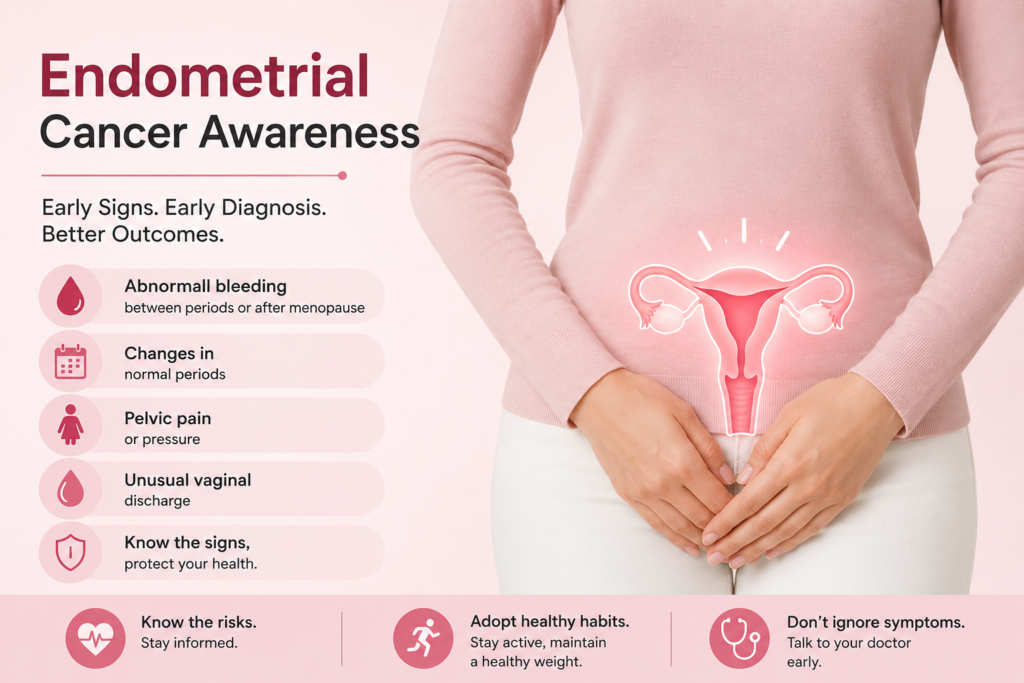
One of the most noticeable signs is abnormal vaginal bleeding. This may include bleeding between periods, heavier-than-usual menstrual flow, or bleeding after menopause. Additionally, unusual discharge, pelvic discomfort, and pain during intercourse may also occur.
However, symptoms can vary from person to person. Some women may experience mild changes that do not immediately seem concerning. Therefore, paying attention to new or unusual symptoms is important.
The common warning signs include:
- Bleeding after menopause
- Unexpected bleeding between menstrual cycles
- Changes in normal periods
- Pelvic pain or pressure
- Unusual vaginal discharge
Moreover, these symptoms do not always mean cancer. They can happen because of several other health conditions. Still, consulting a healthcare professional helps identify the exact cause.
Risk Factors That Increase the Chance of Endometrial Cancer
Several factors may increase the likelihood of developing this condition. Age is one major factor, as the risk generally rises after menopause. Additionally, hormonal changes can influence the health of the uterine lining.
Women with higher levels of estrogen exposure may have an increased risk. This can happen due to certain hormonal conditions, early menstruation, late menopause, or hormone replacement therapy without proper medical guidance.
Furthermore, lifestyle factors can also affect risk. Obesity, diabetes, and limited physical activity are linked with higher chances of developing Endometrial Cancer. Therefore, maintaining a balanced lifestyle can support overall reproductive health.
Family history is another important consideration. Women with close relatives who had certain cancers may need to discuss their risk with a healthcare provider. As a result, knowing personal and family health history can support better prevention strategies.
How Early Detection Helps Manage Endometrial Cancer
Early diagnosis often provides more treatment choices and better health outcomes. Therefore, women should not delay medical visits when they notice unusual symptoms.
Doctors may recommend different tests based on symptoms and health history. These may include pelvic examinations, imaging tests, or procedures to check the uterine lining. Moreover, healthcare professionals can provide guidance based on individual risk factors.
Regular checkups also help identify changes before they become serious problems. Although there is no guaranteed way to prevent every case, awareness and timely action can reduce health risks.
Healthy Habits That Support Prevention and Awareness
A healthy lifestyle can support the body and reduce certain risk factors. Maintaining a healthy weight, staying physically active, and managing conditions like diabetes are important steps.
Additionally, women should understand their menstrual patterns and notice changes over time. Keeping track of unusual symptoms can help during medical discussions.
Avoiding silence is also important. Many women feel uncomfortable discussing reproductive health concerns, but open conversations with healthcare providers can lead to earlier support and better care.
When Should Women Talk to a Doctor?
Any unusual bleeding or unexpected reproductive health change deserves attention. Particularly, bleeding after menopause should always be discussed with a medical professional.
Moreover, women should seek advice when symptoms continue, become stronger, or affect daily life. A healthcare provider can determine whether further testing is needed.
Understanding Endometrial Cancer symptoms does not mean every symptom indicates cancer. Instead, awareness helps women make informed decisions about their health. Early conversations can prevent delays and provide peace of mind.
Taking Action for Better Endometrial Cancer Prevention and Care
Women’s health awareness begins with listening to the body and recognizing important changes. Endometrial Cancer can often show early warning signs, but those signs may be ignored when women stay silent.
Therefore, learning about symptoms, risk factors, and prevention methods is essential. Regular healthcare visits, healthy habits, and open communication can support early detection and better outcomes.
Taking action at the right time can protect long-term health. Awareness is one of the strongest tools women have when it comes to reproductive health and cancer prevention.