
Healthcare is changing as more people look for treatments that match their individual needs. Compounding Medications are becoming an important option for patients who need a more personalized approach when standard medicines may not provide the expected results. These specialized prescriptions are prepared based on a doctor’s instructions and a patient’s specific medical requirements.
Every person responds differently to medication. Therefore, a treatment that works well for one patient may not provide the same results for another. Because of this, doctors and patients are having more conversations about alternative solutions that support better healthcare experiences. Compounding pharmacies help create customized medication options while keeping treatment decisions under the guidance of licensed healthcare providers.
Understanding How Compounding Medications Work
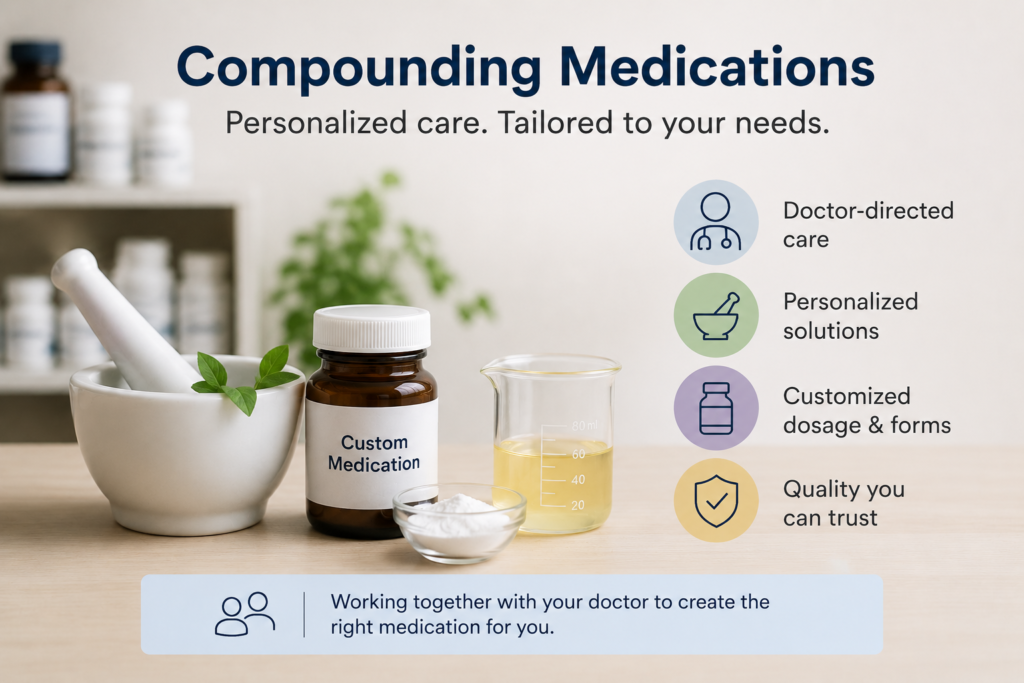
Compounding Medications are specially prepared medicines created by licensed pharmacists based on an individual prescription. Unlike mass-produced medicines, these treatments are designed to meet specific patient needs. However, they are not meant to replace all commercially available medications. Instead, they can provide another option when traditional treatments may not be suitable.
A doctor may consider compounded prescriptions for several reasons. For example, a patient may experience unwanted side effects from a standard medication. Additionally, some patients may need a different dosage strength, a different form of medicine, or a preparation that is easier to use.
Moreover, medication shortages can sometimes create challenges for patients who depend on certain treatments. In these situations, a licensed compounding pharmacy may help provide a doctor-approved alternative.
Compounding pharmacies work closely with healthcare providers to prepare medications according to professional guidelines. As a result, patients can receive treatments that are created with their medical situation in mind.
When Patients May Need Compounding Medications
Compounding Medications can become part of a broader healthcare plan when standard options do not fully meet a patient’s needs. Doctors may discuss this approach when:
- A current medication does not provide the expected benefits.
- Side effects make continuing a treatment difficult.
- A specific medication is unavailable due to supply issues.
- A patient requires a different dosage, strength, or delivery method.
Additionally, some patients may have difficulty taking certain forms of medication. For example, a person may need a liquid version instead of a tablet. In such cases, a customized formulation may support easier and more effective use.
However, the decision to use compounded medicine should always involve a conversation between the patient and a licensed healthcare professional. This ensures that the treatment choice fits the person’s health goals and medical needs.
The Role of 503A Compounding Pharmacies in Patient Care
A 503A compounding pharmacy plays a specific role in preparing patient-specific prescriptions. These pharmacies typically work directly with licensed prescribers to create medications based on individual prescriptions.
Furthermore, quality and safety are important parts of the compounding process. Licensed pharmacies follow required standards and regulations to support consistent preparation practices. Patients should always feel comfortable asking questions about how their medications are prepared and what safety steps are followed.
For example, patients can ask whether the pharmacy follows proper pharmacy laws, uses reliable ingredient sources, and maintains quality control procedures. These conversations help create greater confidence between patients, doctors, and pharmacies.
In addition, transparency allows patients to better understand their treatment options. A strong partnership between healthcare providers and pharmacies can help support better medication experiences.
Choosing the Right Pharmacy for Compounding Medications
Selecting the right pharmacy is an important step when exploring Compounding Medications. Patients should work with their doctors to identify pharmacies that follow professional standards and maintain proper licensing.
Before choosing a pharmacy, patients can discuss several important factors with their healthcare provider. These include the pharmacy’s preparation methods, quality checks, and compliance practices.
Moreover, patients should look for pharmacies that value communication and safety. A reliable compounding pharmacy should provide clear information about how medications are prepared and how quality is maintained.
Because medication directly affects health, trust and transparency matter. Therefore, choosing a qualified pharmacy can help patients feel more confident about their treatment journey.
How Doctors and Patients Can Create Better Treatment Plans
Compounding Medications highlight the importance of personalized healthcare conversations. Instead of following a single approach for every patient, doctors can explore options that better match individual situations.
A patient’s experience with medication is an important part of treatment decisions. Therefore, sharing concerns, discussing side effects, and explaining personal challenges can help doctors make better recommendations.
Additionally, patients should ask questions about their available options. Understanding why a medication is recommended can improve confidence and encourage better communication with healthcare providers.
When doctors and patients work together, treatment plans can become more focused and personalized. This collaborative approach helps ensure that healthcare decisions are based on the patient’s unique needs.
The Future of Personalized Medication Solutions
The demand for personalized healthcare continues to grow. As more patients seek treatments that consider their individual experiences, Compounding Medications may continue to play a valuable role in modern healthcare.
Although compounded prescriptions are not suitable for every situation, they provide another option for certain patients under medical guidance. They represent a shift toward more flexible and patient-focused treatment approaches.
Furthermore, advances in healthcare continue to encourage conversations about better treatment experiences. Patients today want solutions that consider their lifestyle, medical history, and personal needs.
Embracing a More Personalized Approach to Healthcare
Healthcare is moving toward more individualized solutions, and Compounding Medications are an important part of this change. They allow doctors and pharmacists to create treatment options designed around specific patient requirements.
However, safe and effective care depends on professional guidance. Patients should always discuss medication choices with their doctors and choose licensed pharmacies that follow proper standards.
With better communication, quality practices, and patient-focused care, customized medication solutions can help support a more personalized healthcare experience.