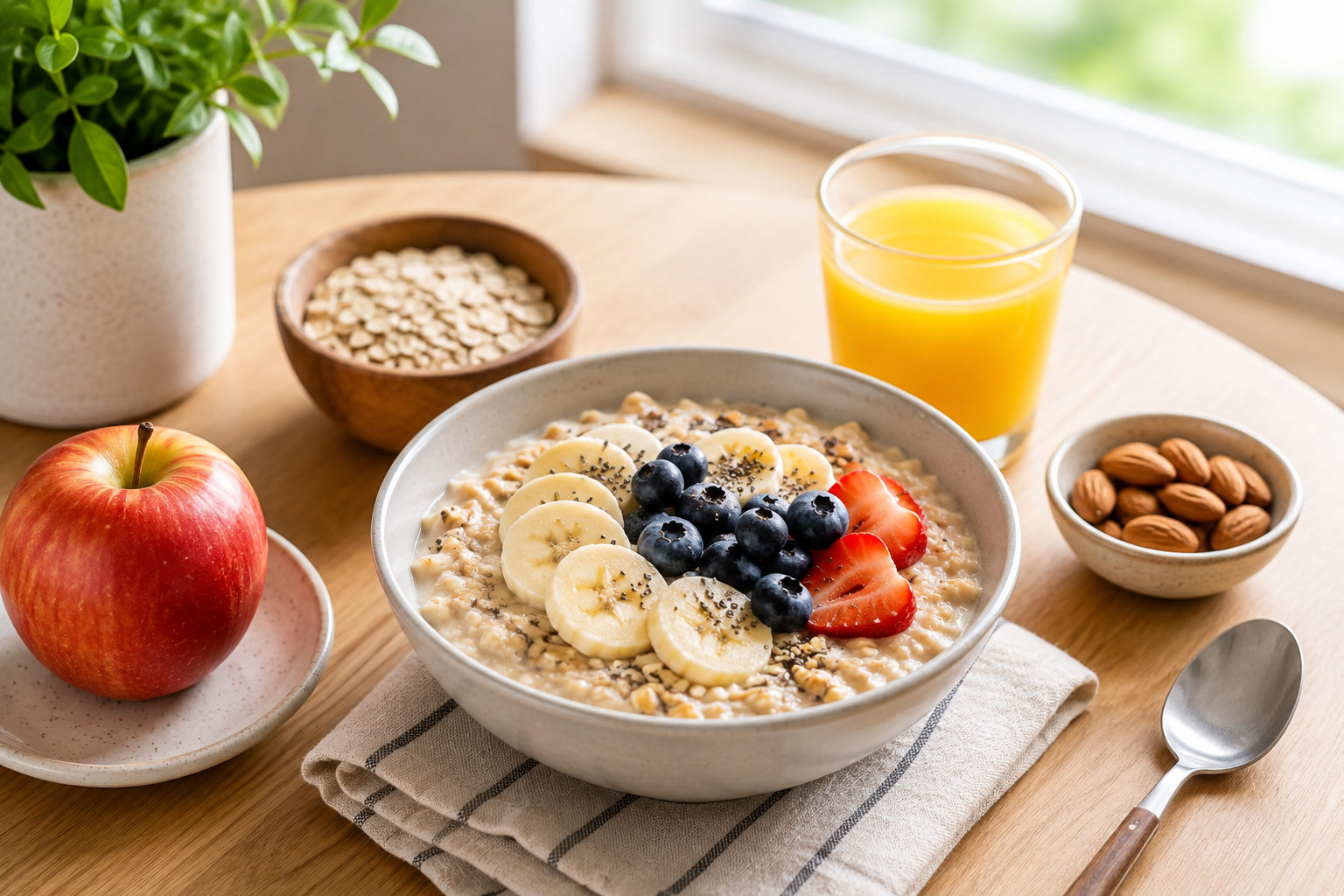
Starting your morning with fiber at breakfast can be a simple way to improve your daily diet. Many people eat meals that contain little fiber, especially in the morning. As a result, they may struggle to reach their daily fiber needs. The Journal Gazette article points to this common gap and notes that many Americans consume far less fiber than recommended.
Fiber is important for digestion, fullness, blood sugar control, and heart health. Therefore, adding fiber-rich foods to your first meal can help you make better nutrition choices throughout the day. More importantly, you do not need to change your entire diet at once. A few simple breakfast swaps can make a meaningful difference.
Fiber at Breakfast Can Support Better Digestion
One of the best-known benefits of fiber is its role in digestive health. Fiber passes through the digestive system without being fully broken down. However, different types of fiber work in different ways. Insoluble fiber adds bulk to stool and helps food move through the digestive tract. Therefore, it can support regular bowel movements and help prevent constipation. Soluble fiber, meanwhile, absorbs water and forms a gel-like substance. This can slow digestion and support normal blood sugar and cholesterol levels.
Because of this, fiber at breakfast can give your digestive system a useful start. Foods such as oats, berries, apples, whole-grain bread, nuts, and seeds can all contribute fiber to a morning meal. However, increase your fiber intake gradually. A sudden large increase may cause gas or bloating. Also, drink enough water as you add more fiber to your meals.
Fiber at Breakfast May Help You Feel Full Longer
Hunger can return quickly after a breakfast built mainly around refined grains and added sugar. For example, a meal based on sugary cereal or highly refined baked foods may provide little fiber. By contrast, fiber-rich foods can take longer to digest. Some types of fiber also increase the volume of food in the digestive system. As a result, they may help you feel satisfied for longer. Harvard’s Nutrition Source notes that soluble fiber can slow digestion and help keep hunger and blood sugar in check.
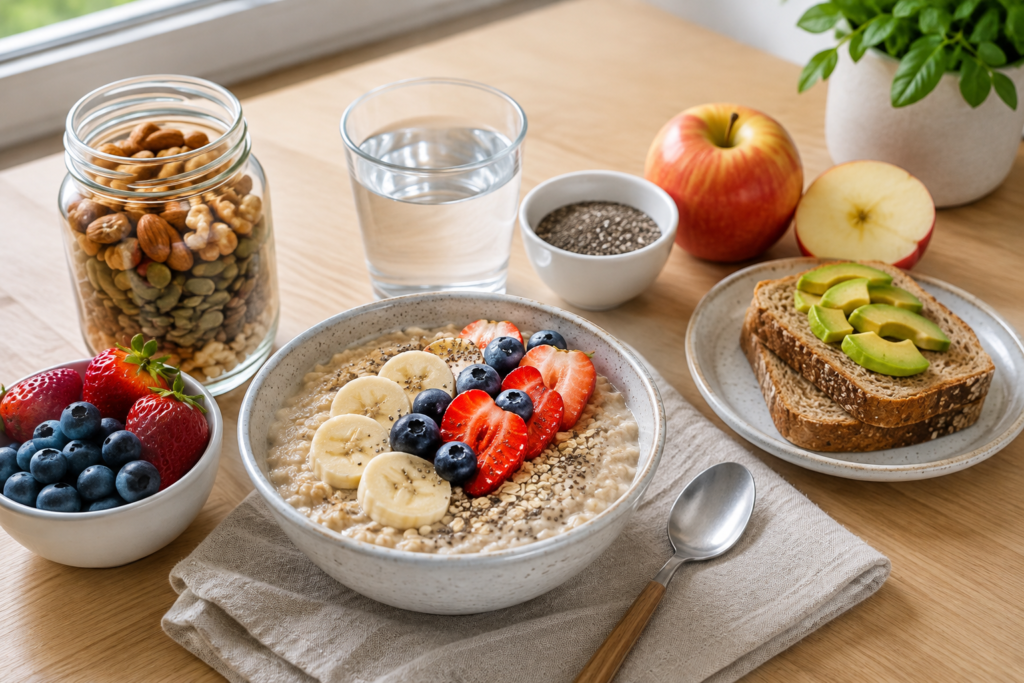
That makes fiber at breakfast useful for people who often feel hungry soon after eating. For example, oatmeal topped with berries and chia seeds can provide a mix of fiber and other nutrients. Similarly, whole-grain toast with avocado and a side of fruit can create a more balanced meal. Fiber alone, however, is not a magic solution for weight management. Overall food quality, portion size, protein intake, physical activity, sleep, and other lifestyle factors also matter.
Fiber at Breakfast Can Support Heart Health
Your morning meal can also play a role in your long-term heart health. Research summarized by Harvard Health links higher-fiber diets with better cardiovascular outcomes. Whole grains, fruits, vegetables, beans, nuts, and seeds are among the main sources of dietary fiber. Soluble fiber may help lower LDL cholesterol. It can also slow digestion and reduce sharp increases in blood sugar after meals. Meanwhile, whole grains provide fiber along with vitamins, minerals, and other plant compounds.
Therefore, choosing a high-fiber breakfast is more than a way to improve digestion. It can become part of a broader eating pattern that supports cardiovascular health. Still, one meal does not determine your health. Instead, think about your breakfast as one opportunity to create a better daily pattern.
Fiber at Breakfast May Help With Blood Sugar Control
The type of carbohydrate you eat can affect how quickly blood sugar rises. Highly processed carbohydrate foods often digest faster than minimally processed whole grains. Fiber can slow digestion and reduce the amount of rapidly available carbohydrate in a meal. Whole oats, for example, contain beta-glucan, a soluble fiber that may help moderate blood sugar responses. Consequently, fiber at breakfast can be especially helpful when it replaces low-fiber refined foods rather than simply being added on top of them.
Consider replacing a sugary breakfast cereal with oatmeal. You can also choose whole-grain toast instead of refined white bread. Adding fruit, nuts, or seeds can further increase the nutritional value of the meal. People with diabetes or other blood sugar concerns should still consider their complete meal pattern and follow advice from their healthcare professional.
Easy Foods to Add More Fiber in the Morning
You do not need complicated recipes to make breakfast more fiber-rich. In fact, familiar foods can work well. Oatmeal is an easy starting point. It contains soluble fiber and can be combined with berries, apples, pears, chia seeds, flaxseeds, or nuts. Whole oats are also a minimally processed whole grain. Fruit offers another simple option. Apples, pears, berries, and other whole fruits provide fiber along with vitamins and plant compounds. Whole fruit is generally a better fiber choice than fruit juice because juice contains little or no fiber compared with the original fruit.
Whole-grain bread can also improve a basic breakfast. Pair it with peanut butter, avocado, eggs, or another nutritious topping. Likewise, nuts and seeds can be sprinkled over oatmeal or yogurt for added texture and fiber. Beans may seem unusual at breakfast in some households. However, they can be part of savory morning meals. A breakfast bowl with beans, vegetables, and whole grains can provide substantial fiber and other nutrients.
Simple Ways to Improve Your Morning Meal
The goal is not to create a perfect breakfast every day. Instead, make small changes that are easy to maintain. Start by checking your usual breakfast. Does it contain a whole grain? Is there a serving of fruit? Could you add seeds or nuts? These questions can help you identify simple improvements. Next, make one change at a time. For example, add berries to your usual oatmeal. Then, try whole-grain toast instead of refined bread. Over time, these small changes can increase your overall fiber intake.
It is also useful to read nutrition labels. Some packaged foods may appear healthy but contain little fiber. Look beyond marketing terms and check the actual nutrition information. Most importantly, remember that fiber should come mainly from a varied diet. Whole grains, vegetables, fruits, legumes, nuts, and seeds provide different types of fiber and other valuable nutrients.
Make Fiber a Regular Part of Your Day
Breakfast is an excellent place to start, but you do not need to get all your fiber in one meal. Instead, spread fiber-rich foods across breakfast, lunch, dinner, and snacks. For instance, you might start the day with oatmeal and berries. Later, choose a piece of fruit and a handful of nuts. At lunch, add beans or vegetables. At dinner, include whole grains and another serving of vegetables.
This approach makes it easier to reach your daily fiber goal without making any single meal feel overwhelming. Harvard’s Nutrition Source notes that adults generally need around 25 to 35 grams of fiber per day, although individual needs vary. Above all, focus on consistency. A breakfast that you can enjoy regularly is more useful than a complicated meal that you cannot maintain.
A Healthier Start Can Begin Tomorrow
A nutritious morning does not require a major lifestyle change. Simply choosing fiber at breakfast can help you add more whole grains, fruits, nuts, seeds, and other plant foods to your diet. Moreover, a fiber-rich breakfast may support digestion, fullness, blood sugar management, and heart health. The key is to choose naturally fiber-rich foods and make gradual changes.
So, instead of viewing breakfast as just the first meal of the day, consider it an opportunity to establish a healthier eating pattern. A bowl of oats, a piece of fruit, or whole-grain toast may seem like a small choice. However, repeated small choices can become valuable long-term habits.