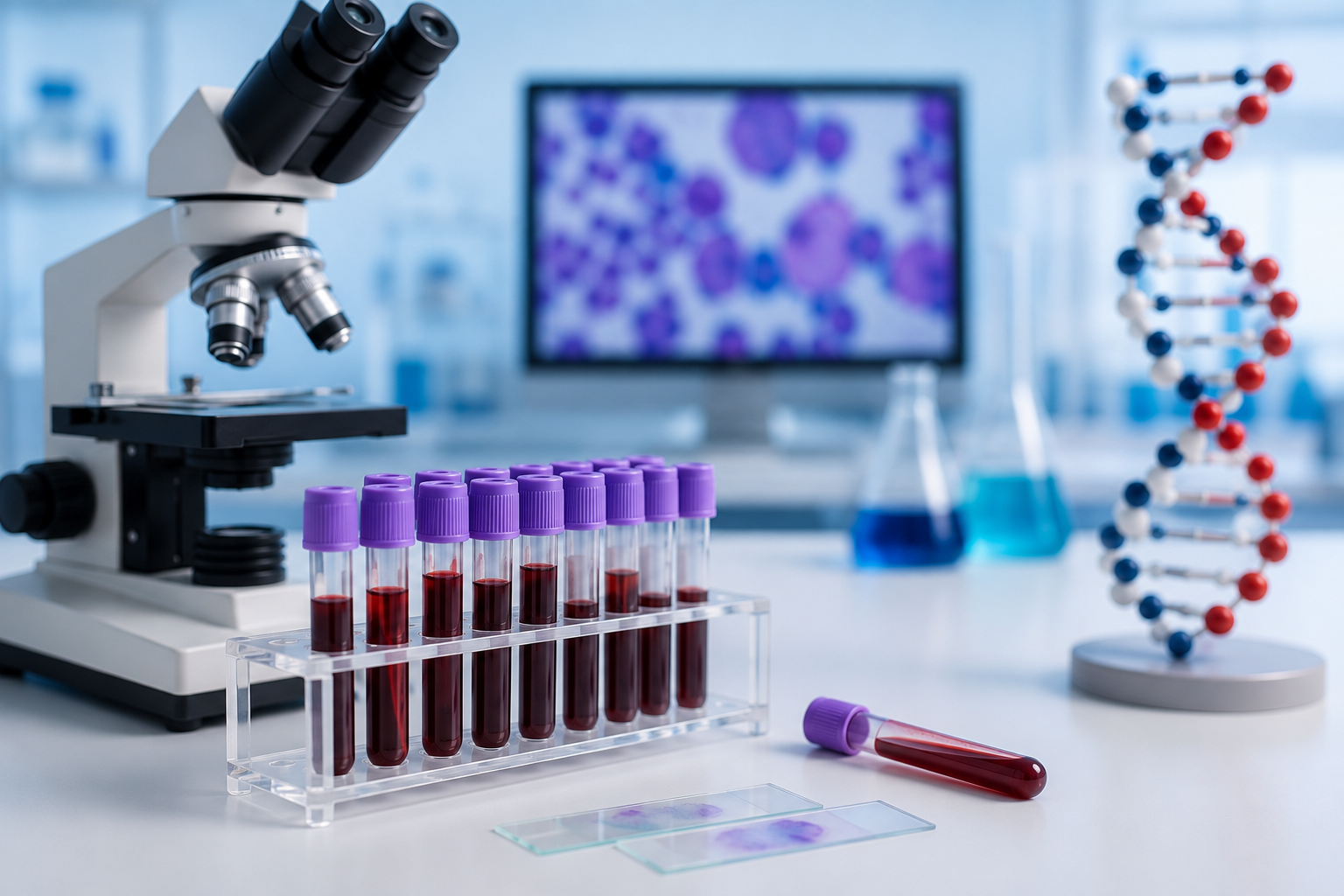
Blood cancers affect the blood, bone marrow, lymphatic system, and immune system. Because these diseases can behave in very different ways, researchers continue to search for more precise and effective treatment options. Today, blood cancer research is moving beyond traditional therapies and exploring new ways to understand cancer cells, identify their weaknesses, and improve patient outcomes. Leukemia, lymphoma, and multiple myeloma are among the best-known blood cancers. However, each disease includes different subtypes, genetic changes, and treatment challenges. As a result, one approach may not work equally well for every patient. Therefore, scientists are studying several pathways at the same time.
At the same time, modern research is changing how experts think about cancer treatment. Instead of focusing only on killing rapidly dividing cells, researchers are exploring targeted medicines, immune-based therapies, cell therapies, and other innovative strategies. These approaches may help doctors develop more personalized treatment plans in the future.
Why blood cancer research Remains Important
Blood cancers can be complex because they often involve changes in blood-forming cells or immune cells. These changes can affect how the body produces healthy blood cells. They may also interfere with the immune system and make it harder for the body to fight infections. Furthermore, some blood cancers respond well to initial treatment but may return later. In other cases, cancer cells can become resistant to therapy. This creates a major challenge for doctors and researchers.
Consequently, scientists are working to understand why some cancers stop responding to treatment. They are also searching for new targets that could help control the disease. This work may eventually lead to therapies that are more effective and less harmful to healthy cells. Research is also important because blood cancers are not all the same. Even patients with the same diagnosis may have different genetic features. Therefore, treatment decisions increasingly require a closer look at the biology of each cancer.
This growing understanding has helped move cancer care toward a more precise model. Researchers can now study specific proteins, genetic changes, and cellular pathways that may contribute to cancer growth.
Exploring New Targets in Blood Cancer
One major area of blood cancer research involves identifying specific targets found on or inside cancer cells. Researchers are studying proteins and biological pathways that may play an important role in the growth and survival of malignant cells. For example, scientists are investigating ROR1, a protein that can be found at increased levels in several blood cancers. Understanding how this protein works may help researchers develop therapies that target cancer cells more selectively.
Another area of interest involves Bruton’s tyrosine kinase, or BTK. This protein plays an important role in B-cell signaling. Researchers are exploring ways to inhibit this pathway, especially because resistance to existing treatments remains a concern for some patients. Scientists are also examining lysine-specific demethylase 1, commonly called LSD1. This enzyme may influence the development and maturation of blood cells. By studying its role, researchers hope to learn whether it could become a useful target for future therapies.
In addition, researchers are investigating the BCR::ABL protein in certain types of leukemia. This protein is linked to abnormal cell growth. Understanding its function may help scientists explore new ways to control the proliferation of cancerous blood cells. These examples show why modern research takes a broad approach. Scientists are not relying on a single target. Instead, they are examining several biological mechanisms that could contribute to disease.

The Role of the Immune System in Blood Cancer Research
The immune system has become a major focus of blood cancer research. Normally, immune cells protect the body by identifying and attacking harmful invaders. However, cancer cells can sometimes avoid immune detection or weaken the body’s natural defenses. Researchers are therefore exploring ways to help immune cells recognize cancer more effectively. One promising area involves T-cell engagement. T cells are immune cells that can identify and destroy abnormal cells under the right conditions.
Scientists are studying approaches that may help T cells identify specific markers on cancer cells. This strategy could potentially improve the body’s ability to attack certain leukemias and lymphomas. Moreover, immune-based treatment has already changed cancer care in important ways. However, challenges remain. Not every patient responds to immunotherapy, and some cancers can develop resistance.
For that reason, researchers are looking for ways to make immune-based treatments more reliable. They are also examining combinations of therapies that may work together. The goal is not simply to create a stronger treatment. Instead, researchers want to understand which patients are most likely to benefit from a particular approach. This could help make treatment more personalized and improve the balance between effectiveness and safety.
Targeted Treatment May Support More Personalized Care
Traditional cancer treatments can affect both cancerous and healthy cells. Although these treatments remain important, researchers are increasingly interested in targeted therapies. Targeted treatment focuses on specific features that help cancer cells survive or multiply. Because these features may be more common in cancer cells than healthy cells, researchers hope that targeted medicines can offer a more precise approach.
However, targeted therapy is not always simple. Cancer cells can change over time. They may also develop new mutations that allow them to escape treatment. As a result, researchers continue to study how cancer adapts. This information may help scientists design treatments that work against resistance.
Genetic testing may also play a growing role. By examining the genetic characteristics of a person’s cancer, doctors may gain more information about which treatments could be appropriate. This approach is especially relevant when standard treatment options become limited. Therefore, the future of cancer care may involve combining detailed genetic information with clinical findings. Such a strategy could help physicians make better-informed decisions for individual patients.
Clinical Trials Help Turn Research Into Treatment
New discoveries must be carefully tested before they become standard medical treatments. This is where clinical trials play an essential role. Clinical trials allow researchers to evaluate potential therapies in a controlled setting. Depending on the stage of development, a study may examine safety, dosage, effectiveness, or long-term outcomes.
For people living with difficult-to-treat blood cancers, clinical trials may provide access to therapies that are not yet widely available. However, participation is not suitable for everyone. Eligibility depends on several factors, including cancer type, previous treatment, overall health, and the specific requirements of the study. At the same time, clinical trials help researchers learn more about cancer. Even when a treatment does not produce the expected result, the findings can provide valuable information for future studies.
Expanding access to clinical trials is also important. Patients may live far from major research centers, making participation difficult. Therefore, researchers and healthcare organizations are exploring ways to bring more studies into community settings and reduce barriers to participation. Ultimately, clinical research connects laboratory discoveries with real patient care. It allows promising ideas to be tested carefully before they become part of everyday treatment.
Overcoming Treatment Resistance Through Research
Treatment resistance remains one of the biggest challenges in cancer medicine. A therapy may work well at first, yet some cancer cells may survive and eventually grow again. This problem can occur for several reasons. Cancer cells may develop new genetic changes. They may also use alternative biological pathways to continue growing.
Because of this, blood cancer research increasingly focuses on understanding resistance. Researchers want to know why certain treatments stop working and how future therapies can overcome these changes. One possible strategy involves targeting more than one pathway. Another approach involves combining different types of treatment. Researchers may also investigate whether changing the timing or sequence of therapies can improve results.
However, combination treatment must be studied carefully. Using multiple therapies can sometimes increase side effects. Therefore, scientists must consider both potential benefits and risks. The long-term goal is to develop treatments that control cancer more effectively while maintaining a patient’s quality of life.
The Growing Importance of Precision Medicine
Precision medicine is another important direction in modern oncology. Instead of treating every patient with the same diagnosis in exactly the same way, precision medicine considers the unique characteristics of each person’s disease. For blood cancers, this may include genetic information, biomarkers, disease subtype, and previous treatment history.
As research advances, doctors may gain more tools to identify which patients are likely to respond to specific therapies. This could reduce the use of treatments that are unlikely to help and allow patients to receive more appropriate care sooner. However, precision medicine still has limitations. Not every genetic change has a known treatment. Also, cancer biology can change during the course of the disease.
Therefore, ongoing research remains essential. Scientists need to continue discovering new cancer targets and learning how those targets behave over time.
What the Future May Bring for Patients
The future of blood cancer research will likely involve several approaches working together. Targeted therapies, immunotherapy, cell-based treatments, genetic testing, and improved clinical trials may all contribute to better care. Researchers are also looking at how different treatment methods can complement one another. For example, a targeted medicine may help weaken cancer cells before an immune-based treatment is used. In another situation, genetic testing may help doctors identify a clinical trial that matches a patient’s specific disease characteristics.
However, progress takes time. New treatments must go through careful testing to confirm that they are safe and effective. Researchers must also understand possible side effects and determine which patients are most likely to benefit. Even so, continued scientific progress offers reasons for hope. Each new discovery adds to the broader understanding of blood cancers. Over time, these findings may support more effective and personalized treatment options.
For patients and families, this progress also highlights the importance of discussing treatment choices with a qualified healthcare team. Depending on the diagnosis, patients may have access to standard therapies, targeted treatments, or clinical trials.
Research That Keeps Moving Cancer Care Forward
Modern blood cancer research reflects a major shift in the way scientists approach difficult diseases. Researchers are studying cancer at a deeper biological level while exploring new ways to use the immune system and target specific cancer pathways. At the same time, clinical trials help transform promising laboratory discoveries into potential treatment options. Research into treatment resistance may also help doctors address cancers that return or stop responding to existing therapies.
Although many challenges remain, the continued development of new approaches is an important part of improving cancer care. As scientists learn more about leukemia, lymphoma, myeloma, and other hematologic malignancies, they can continue searching for treatments that are more precise, effective, and suitable for individual patients.
The journey from scientific discovery to an approved treatment can be long. Nevertheless, every study adds valuable knowledge. With continued investment in research and clinical development, future patients may have access to more choices and better outcomes than those available today.