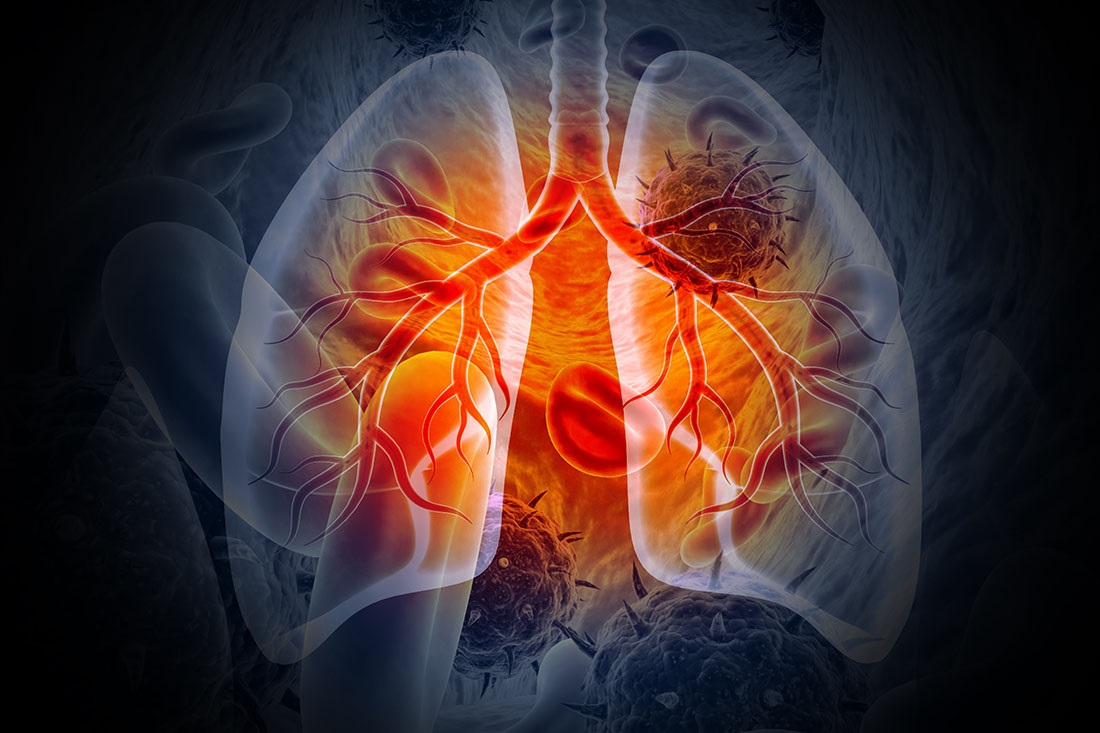
The fight against lung cancer continues to depend on strong science, new ideas, and long-term funding. Recent lung cancer research has received a major boost as the Lung Cancer Foundation of America (LCFA) and the International Association for the Study of Lung Cancer (IASLC) awarded $400,000 to two early-career researchers. The funding supports projects focused on earlier detection and treatment resistance.
Why Lung Cancer Research Needs Continued Support
Lung cancer remains a serious public health concern. It also presents complex challenges for researchers because the disease can develop in different ways and respond differently to treatment. As a result, scientists continue to search for better methods to detect, understand, and treat it. World Lung Cancer Day, observed on August 1, helps raise awareness about these challenges. However, research needs support throughout the year. Funding allows scientists to test new ideas, develop better tools, and explore questions that could lead to improved patient care.
The recent $400,000 award highlights the value of supporting researchers early in their careers. LCFA and IASLC each awarded $200,000 to two promising scientists. Their work addresses two important areas of lung cancer science: understanding factors that may influence cancer development and finding ways to overcome treatment resistance.
Lung Cancer Research Explores the Lung Microbiome
One of the funded projects comes from Dr. Jared Mayers of Fred Hutch Cancer Center. His work examines the naturally occurring bacteria found in the lungs and their possible connection to lung cancer. Scientists have long faced challenges when studying these microbes because they can exist in very small amounts. Therefore, Dr. Mayers is developing highly sensitive methods to capture and study them in lung tissue. His goal is to understand how these bacteria may influence cancer development.
This area of lung cancer research could open new paths for understanding how the disease begins. By learning more about the environment inside the lungs, researchers may identify factors that contribute to cancer risk. However, much work remains before laboratory findings can influence clinical care. Research must move through careful testing and validation. Still, projects like this provide an important starting point for future discoveries.

Studying How Lung Cancer Resists Treatment
The second project comes from Dr. Jaime L. Schneider of Dana-Farber Cancer Institute. Her research focuses on how lung cancer cells survive and continue growing after treatment. Cancer cells can sometimes adapt to therapies. Consequently, treatments that work at first may become less effective over time. This creates a major challenge for doctors and patients.
Dr. Schneider is studying how lung cancer cells manage their energy and whether that process contains a weakness researchers can target. Her goal is to help develop treatments that can prevent cancer cells from adapting so easily. This approach is important because treatment resistance can limit long-term success. By understanding how cancer cells escape therapy, researchers may find new ways to keep treatments working for longer periods.
Early-Career Scientists Can Drive New Discoveries
Supporting early-career scientists can strengthen the future of cancer medicine. These researchers often bring new questions and fresh approaches to difficult problems. Yet, promising projects can struggle to move forward without early funding. The LCFA Early Career Researcher grant program aims to address this challenge. The program gives emerging researchers funding that can help them develop their work and compete for larger independent grants later.
According to LCFA, the program has awarded 25 grants totaling $4.6 million. Those grants have helped supported research attract more than $50 million in additional funding. This creates what the organization describes as a multiplier effect. As a result, a relatively small research award can have a much larger impact over time. Early funding can help scientists collect data, test new methods, and establish a foundation for future studies.
Turning Research Ideas Into Patient Benefits
The ultimate goal of lung cancer research is to improve outcomes for patients. However, that process takes time. A discovery in a laboratory does not immediately become a treatment or screening tool. Researchers must first understand the science. Then, they need to test their findings carefully. Clinical studies may follow when a discovery shows enough promise. After that, treatments and diagnostic approaches must meet safety and effectiveness standards.
Even so, every stage matters. Better knowledge about lung biology can support new prevention strategies. Improved understanding of cancer cells can lead to new treatment targets. More accurate detection methods could also help doctors identify disease earlier. Early detection is especially important because finding cancer sooner can create more opportunities for treatment. That is why one of the newly funded projects focuses on factors that may influence cancer development.
The Search for Earlier Lung Cancer Detection
Detecting lung cancer at an earlier stage remains an important research goal. However, early disease can be difficult to identify. Scientists are studying biological changes that might provide clues before cancer becomes more advanced. Dr. Mayers’ research into lung bacteria adds another possible piece to this larger picture. By examining how microbes interact with lung tissue, his team hopes to learn whether these organisms play a role in cancer development.
This does not mean that lung bacteria have been proven to cause lung cancer. Instead, the research seeks to better understand a possible connection. Careful investigation is essential because cancer involves many biological and environmental factors. Continued lung cancer research can help separate promising ideas from unsupported theories. Over time, that process may reveal new opportunities for prevention, early detection, or treatment.
Addressing Treatment Resistance
Treatment resistance presents another major obstacle. Cancer cells can change as they grow. In some cases, those changes allow them to survive therapies that previously controlled the disease. Dr. Schneider’s project explores the energy systems that help these cells survive. Understanding those systems may help researchers identify weaknesses that future treatments can target.
This work also shows why cancer research needs multiple approaches. A treatment can be effective against cancer cells in one situation but less effective in another. Researchers must continue studying how tumors respond and adapt. As knowledge grows, scientists may be able to design therapies that make it harder for cancer cells to escape treatment. Such progress could support longer-lasting responses and better options for patients with resistant disease.
Collaboration Strengthens Cancer Research
Cancer research rarely advances through one scientist or one laboratory alone. Researchers need funding, technology, clinical knowledge, patient participation, and collaboration across institutions. LCFA and IASLC provide support within this broader research community. Their grant program connects funding with scientists who are developing new approaches to lung cancer. Meanwhile, larger research programs can build on early discoveries and expand promising projects.
The two 2026 grant recipients also represent different research directions. Dr. Mayers is examining the lung’s microbial environment, while Dr. Schneider is studying how cancer cells survive treatment. Together, these projects show how researchers can approach the disease from different angles. Such diversity is valuable. Lung cancer is not one simple disease. Researchers therefore need multiple strategies to understand its causes, behavior, and response to treatment.
How Research Funding Creates Hope
The $400,000 investment represents more than financial support for two laboratories. It provides researchers with resources to investigate difficult questions and develop evidence that can support future funding. The LCFA program’s previous results demonstrate why early investment can matter. Its grants have helped researchers attract substantially larger amounts of funding for continued work. This can allow promising ideas to move beyond an initial study and into broader research programs.
For patients and families affected by lung cancer, research can offer a path toward better options. Progress may happen gradually, but each well-designed study adds knowledge to the field. At the same time, research funding should complement other efforts, including prevention, screening, diagnosis, treatment, and patient support. A comprehensive approach is essential when addressing a complex disease.
A Continued Commitment to Lung Cancer Research
The latest funding from LCFA and IASLC demonstrates the importance of investing in new scientific ideas. Dr. Mayers and Dr. Schneider are investigating different challenges, yet both projects share a common goal: improving what researchers understand about lung cancer and finding better ways to help patients. Continued lung cancer research can support progress in early detection, treatment development, and resistance management. However, meaningful advances require patience, careful testing, and sustained investment.
For that reason, supporting early-career scientists can have lasting value. Today’s small research grant may provide the evidence needed for tomorrow’s larger study. In turn, those studies may help create new tools, therapies, or strategies for patients. The $400,000 award is one step in that larger journey. As scientists continue to investigate how lung cancer begins, develops, and responds to treatment, each discovery can help move the field closer to more effective care and better patient outcomes.