Hormonal fluctuations affect almost every part of a woman’s body during midlife transition. Many women prepare for hot flashes and mood changes, yet ocular changes often come as a sudden surprise. Fluctuating estrogen and progesterone levels alter the delicate moisture balance across your ocular surface. Consequently, thousands of women experience severe discomfort without realizing the true underlying cause. Understanding menopause dry eye symptoms empowers you to take direct control of your eye comfort and long-term visual health.
Understanding Menopause Dry Eye Symptoms in Midlife
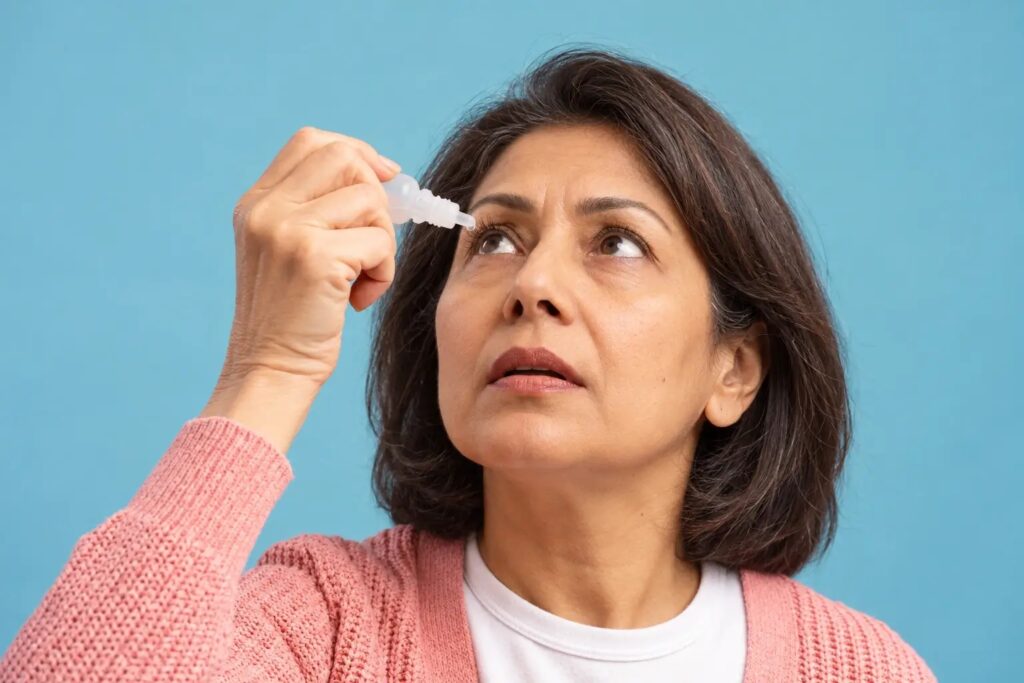
Hormonal shifts during perimenopause directly impact your tear production system. Estrogen and androgen receptors cover the surface of your eyes and meibomian glands. When hormone levels plummet, tear quality decreases rapidly. Thus, your eyes lose their primary protective liquid barrier.
Many women mistake this irritation for simple daily fatigue or allergy flare-ups. However, natural aging combined with low estrogen creates persistent inflammation. Therefore, recognizing these subtle changes early prevents long-term corneal damage.
Common Signs to Watch For
- Burning or stinging sensation in both eyes
- Gritty feeling, as if sand is trapped under eyelids
- Excessive watery tearing triggered by sudden irritation
- Redness, inflammation, and sensitivity to bright light
- Blurry vision that fluctuates throughout the day
Why Hormones Trigger Menopause Dry Eye Symptoms
Your body relies on three distinct layers to create stable, protective tears. First, a thin oil layer stops evaporation. Second, a watery layer washes away dust. Third, a mucus layer spreads moisture evenly.
As estrogen declines, the lipid-producing glands inside your eyelids become inflamed and clogged. Consequently, tears evaporate much faster than normal. Furthermore, lower androgen levels reduce overall liquid secretion. Hence, the eye surface becomes vulnerable to friction and irritation.
This hormonal progression follows a distinct chain of events:
- Hormonal Decline: Decreasing estrogen and androgen levels trigger gland inflammation.
- Impaired Tear Production: Reduced oil secretion leads to unstable tears, while decreased watery tear volume weakens hydration.
- Rapid Evaporation: The ocular surface loses its protective barrier, causing tears to dry up quickly.
- Symptom Onset: Menopause dry eye symptoms appear, including redness, burning, and persistent irritation.
How Perimenopause Differs From Full Menopause
Perimenopause begins years before your menstrual cycle permanently stops. During this stage, erratic spikes and drops in estrogen cause intermittent eye irritation and fluctuating blurriness. Therefore, eye irritation might come and go without a clear pattern.
In contrast, full menopause brings a consistent, low hormone baseline. Because of this sustained drop, women frequently report persistent dryness, redness, and chronic gritty feelings. Finally, post-menopause involves permanently low hormone levels, which increases the risk of chronic ocular inflammation. As a result, daily proactive management becomes essential for lasting relief.
Daily Habits to Relief Menopause Dry Eye Symptoms
Simple daily modifications dramatically improve tear retention and eye comfort. First, install a warm-mist humidifier in your home or office workspace. Because dry ambient air pulls moisture from your eyes, adding room humidity slows evaporation.
Second, follow the popular 20-20-20 visual rule. Every twenty minutes, look at an object twenty feet away for twenty seconds. Additionally, conscious blinking exercises keep the protective oil layer moving smoothly over your corneas.
Professional Treatments for Menopause Dry Eye Symptoms
Medical treatments offer robust relief when lifestyle adjustments are not enough. Eye care professionals frequently prescribe preservative-free lubricating drops for daily hydration. Furthermore, prescription anti-inflammatory drops reduce persistent swelling on the eye surface.
In severe cases, specialists insert tiny punctal plugs into tear ducts. Consequently, natural tears remain on your eye surface much longer. Additionally, targeted heat therapies unclog blocked oil glands inside your eyelids effectively.
Nutrition and Hydration Strategies for Ocular Health
Dietary choices support tear production from the inside out. Essential fatty acids, especially Omega-3s, significantly improve oil gland function. Therefore, eating wild salmon, flaxseeds, and walnuts helps maintain tear quality.
Simultaneously, increasing daily water intake supports baseline hydration levels throughout your body. Because dehydration directly worsens ocular irritation, drink fresh water continuously. Finally, limit excessive caffeine intake, as it contributes to general fluid loss.
Protecting Your Vision for the Future
Managing midlife ocular health requires a consistent, multi-tiered approach. First, schedule annual comprehensive eye exams with an experienced optometrist or ophthalmologist. Second, discuss your hormonal symptoms openly with your healthcare providers.
Because early intervention stops chronic inflammation, addressing discomfort early yields excellent long-term results. Therefore, prioritize your eye comfort today to maintain clear, painless vision for years to come.