Children depend on healthy vision to learn, play, read, and explore the world around them. However, vision problems can sometimes develop without clear warning signs. One common condition parents should understand is myopia in children, also known as nearsightedness. It makes distant objects look blurry while nearby objects usually remain clear. As a result, children may struggle to read the classroom board, recognize faces from a distance, or participate in outdoor activities. Fortunately, parents can take practical steps to recognize early symptoms, arrange eye exams, and support healthy vision as their children grow.
What Is Myopia in Children?
Myopia is a refractive error that affects how the eye focuses light. Normally, the eye focuses light directly onto the retina, which sends visual signals to the brain. However, when the eyeball grows too long or the cornea curves too steeply, light focuses in front of the retina. Consequently, distant objects appear unclear.
This condition often begins during school-age years and may progress throughout childhood and adolescence. In addition, genetics can influence a child’s risk. Children with one or both nearsighted parents may have a higher chance of developing the condition. Although glasses and contact lenses can correct blurry vision, parents should also ask an eye care professional about monitoring changes in their child’s prescription. Early attention can help families explore suitable options for managing progression.
Common Signs of Myopia in Children
Young children may not realize that their vision is blurry. They might assume everyone sees the world the same way. Therefore, parents and teachers should watch for changes in everyday behavior.
Common warning signs include:
- Squinting when looking at distant objects.
- Sitting very close to the television.
- Holding books or screens unusually close to the face.
- Struggling to see classroom boards or distant signs.
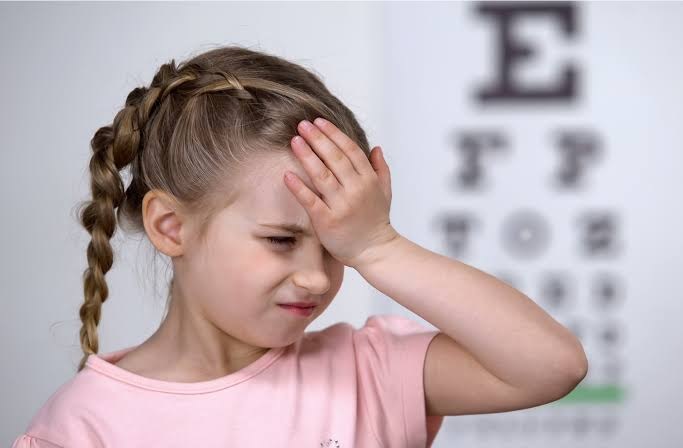
- Complaining of headaches or eye strain.
- Rubbing the eyes frequently or showing difficulty with distance-based activities.
However, these signs do not always indicate nearsightedness. Other vision problems can cause similar symptoms. Therefore, parents should arrange a professional eye examination when they notice repeated changes in their child’s vision. A routine screening can identify possible concerns, but a comprehensive assessment may be necessary to confirm the diagnosis.
What Causes Myopia in Children?
Several factors may contribute to childhood nearsightedness. Genetics is one important factor, as children with nearsighted parents may face a greater risk. Nevertheless, family history does not mean that a child will definitely develop the condition.
Daily habits may also play a role. For example, children who spend long periods reading, studying, gaming, or using digital devices at close range may spend less time outdoors. Research has linked more outdoor time with a lower risk of developing myopia, although the exact reasons behind this relationship are still being studied. Furthermore, childhood is an important period of eye growth. As children grow, their eyes change, and some may develop nearsightedness during this time. Parents cannot control every risk factor, but they can encourage balanced daily routines and arrange regular vision checks.
Why Early Eye Exams Matter
Regular vision screening helps identify problems that children may not report themselves. Schools and pediatric healthcare providers may offer basic screening. However, a screening is not the same as a complete eye examination. When a child struggles to see distant objects or does not pass a vision screening, an optometrist or ophthalmologist can assess their eyesight and determine the appropriate prescription. The professional may also check eye health and recommend follow-up visits based on the child’s age and individual needs.
Early diagnosis can help children see more clearly in the classroom and during daily activities. In addition, it allows parents to discuss whether the child’s prescription is changing and whether myopia management options may be appropriate. Parents should not wait for a school screening when their child already shows signs of a vision problem. Instead, they should arrange an eye care appointment promptly.
Practical Ways to Support Myopia in Children Management
Parents can support their child’s eye health through simple, consistent habits. Although these steps cannot guarantee prevention, they can contribute to a healthier routine and may help reduce the risk of developing myopia.
Encourage outdoor activities: Make time for walking, cycling, playing sports, or spending time in a park. Outdoor activities give children opportunities to look at objects from different distances. Research suggests that spending more time outdoors may help lower the risk of developing nearsightedness.
Balance screen time: Digital devices are useful for learning and entertainment. However, encourage regular breaks during prolonged close-up activities. Children can pause, look into the distance, stretch, and return to their tasks after a short rest.
Create a comfortable study space: Provide suitable lighting and encourage children to maintain a comfortable reading distance. They should avoid holding books or devices extremely close to their eyes for long periods.
Maintain regular eye checks: Follow professional advice about vision screening and repeat examinations. Children whose prescriptions change quickly may need closer monitoring.
Choose healthy daily habits: Adequate sleep, physical activity, and a balanced diet support general health. While these habits do not directly cure myopia, they form part of a healthy lifestyle.
Treatment Options for Childhood Nearsightedness
Treatment depends on the child’s age, prescription, eye health, and the rate at which their myopia progresses. Therefore, families should discuss available options with a qualified eye care professional. Prescription glasses are a common and practical way to correct blurry distance vision. Contact lenses may suit some older children who can follow proper hygiene and handling instructions.
In certain cases, specialists may recommend myopia control treatments. These can include specific spectacle lenses, specialized contact lenses, or low-dose atropine eye drops. Another option, called orthokeratology, uses specially designed contact lenses worn overnight to temporarily reshape the cornea. Each approach has different benefits, limitations, and risks.
Importantly, these treatments are not suitable for every child. Contact lenses require careful hygiene, while eye drops need professional guidance and monitoring. Parents should never start a treatment without consulting an eye care professional. Regular follow-up appointments help the specialist assess changes and adjust the plan when necessary. The goal may include correcting vision and slowing progression, depending on the child’s needs.
How Parents Can Make Eye Care Easier
Children may feel worried about wearing glasses or visiting an eye doctor. Parents can make the experience easier by explaining that clear vision helps with learning, sports, and everyday activities. Allow children to participate in choosing comfortable frames when glasses are prescribed. Also, speak positively about eye examinations and explain what will happen during the appointment. These simple steps can help reduce anxiety and encourage children to follow their treatment plan.
Teachers can also help by reporting repeated difficulties with reading the board or recognizing distant objects. However, classroom observations should support professional assessment rather than replace it.
Support Healthy Vision as Your Child Grows
Understanding myopia in children helps parents recognize warning signs and take action before vision problems interfere with everyday life. Although genetics and eye growth can influence the condition, regular examinations, outdoor play, balanced screen habits, and professional guidance can make a meaningful difference.
Most importantly, parents should avoid assuming that a child will outgrow blurry distance vision. Instead, they should seek an eye examination when concerns arise and follow the specialist’s recommendations. With early attention and consistent care, families can help children see clearly, participate confidently in daily activities, and maintain better eye health as they grow.