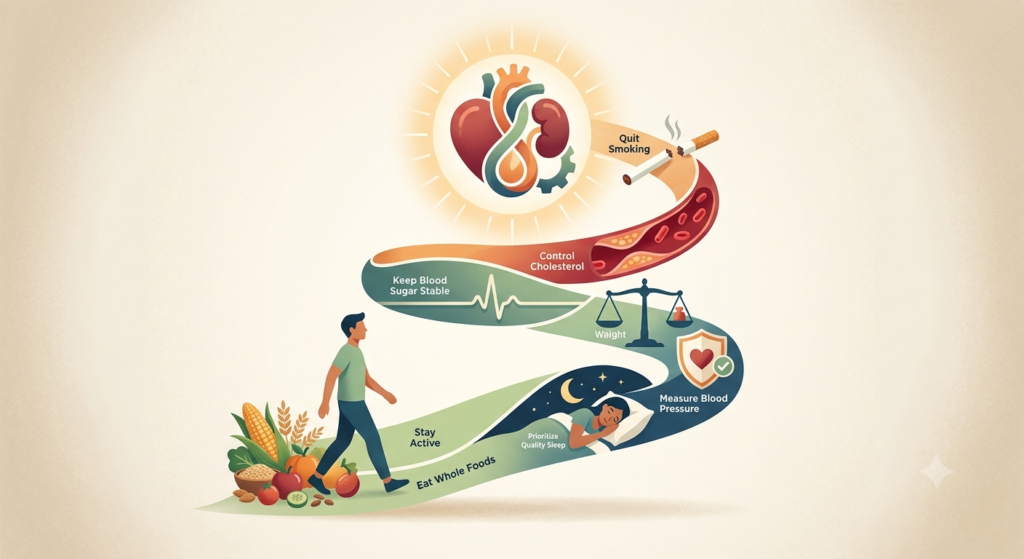
Maintaining good wellness often feels overwhelming, but small choices can create big results over time. Your body functions as an interconnected system where your heart, kidneys, and metabolism constantly interact. Medical experts call this connection cardiovascular-kidney-metabolic health. When one system struggles, the others usually suffer as well. Therefore, adopting daily health habits can help protect your entire body from chronic diseases like diabetes and stroke.
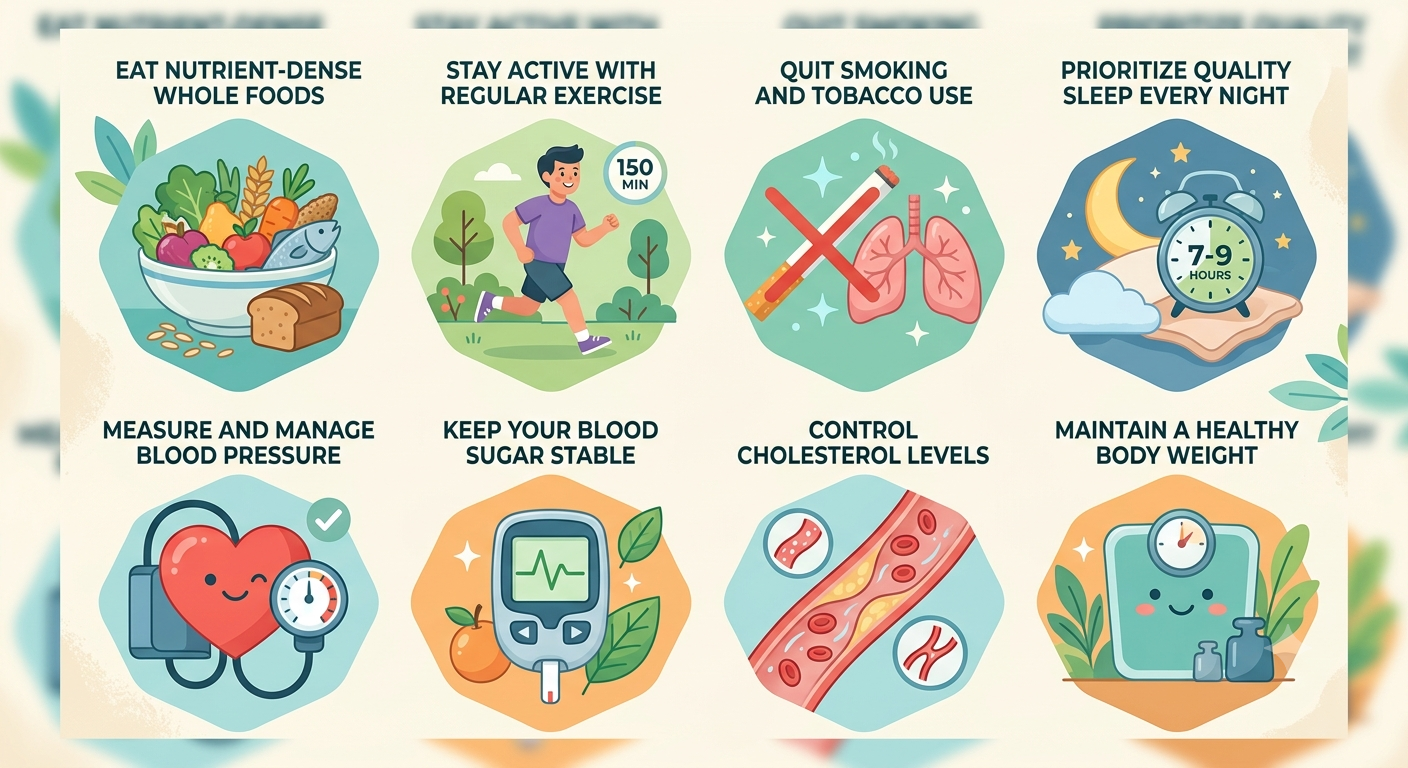
Living a balanced lifestyle does not require a complete overnight overhaul. Instead, focusing on practical lifestyle adjustments can easily improve your overall vital function. According to guidelines like the American Heart Association’s Life’s Essential 8, simple actions pay off significantly. Below are eight simple daily health habits that naturally support your cardiovascular system, kidney function, and energy levels.
1. Eat Nutrient-Dense Whole Foods
Food serves as essential fuel for your body, so choosing nutritious meals keeps your internal engines running smoothly. A balanced diet plays a major role in keeping your blood pressure, glucose, and triglycerides in check. Consequently, smart choices today protect your blood vessels for many years to come.
Fill your plate with colorful vegetables, fresh fruits, whole grains, and clean plant-based proteins like beans and lentils. Additionally, lean animal proteins such as fish and poultry offer high nutrition with low saturated fat. You should also limit sodium, added sugars, and processed fats because excess salt stresses your kidneys. Drinking plenty of water throughout the day further helps clear toxins and keeps your organs performing well.
2. Stay Active with Regular Exercise
Physical movement keeps your heart muscular and lowers stiffness across your arteries. Active routines do not need to feel like exhausting chores, so picking fun hobbies works best. Regular movement naturally improves blood circulation and strengthens your cardiovascular system.
Aim for roughly 150 minutes of moderate activity each week, such as brisk walking, dancing, or gardening. However, if you prefer vigorous exercise, 75 weekly minutes of running or cycling will also deliver excellent results. Thus, building strong daily health habits through physical fitness keeps your metabolism efficient and boosts daily energy.
3. Quit Smoking and Tobacco Use
Tobacco smoke damages blood vessels and speeds up plaque buildup within your arteries. This extra pressure harms both heart tissue and the tiny filters inside your kidneys. As a result, quitting tobacco stands as one of the most effective ways to restore your physical well-being.
Furthermore, stopping smoke exposure quickly reduces your risk of heart attack and stroke. Although quitting takes time and patience, leaning on support groups or medical counselors improves your success. Removing toxic chemicals allows your blood vessels to heal naturally over time.
4. Prioritize Quality Sleep Every Night
Rest gives your entire body a vital chance to repair cellular damage and regulate core hormones. Despite these major benefits, sleep remains one of the first things people sacrifice during busy workweeks. Chronic sleep loss raises stress hormones, increases blood pressure, and contributes to weight gain.
Target a consistent 7 to 9 hours of quality sleep every single night. Create a restful environment by keeping your bedroom cool, dark, and quiet. Moreover, put away smartphones and screens an hour before bed so your brain produces natural melatonin. Making rest a priority is one of the easiest daily health habits you can form for long-term vitality.
5. Measure and Manage Blood Pressure
High blood pressure forces your heart to work much harder to push blood through your body. Over time, this intense pressure weakens your heart muscle and ruins delicate kidney arteries. Because high blood pressure rarely shows early symptoms, checking it frequently remains essential.
Keep an eye on your numbers using a home monitor or by visiting your local clinic. Since high readings strain your metabolic health, controlling pressure protects multiple organs at once. Lowering salt intake, exercising, and managing stress actively keep your numbers in a safe zone.
6. Keep Your Blood Sugar Stable
Glucose powers your cells, but high blood sugar damages blood vessels over extended periods. This metabolic strain increases your risk of developing type 2 diabetes and kidney complications. Therefore, controlling sugar spikes plays a central role in protecting your metabolic system.
Eat complex carbohydrates paired with protein and fiber to slow down sugar absorption. Avoid sugary drinks and processed snacks that cause sudden spikes and crashes. If you notice persistent fatigue or frequent thirst, speak with a doctor to check your blood glucose levels early.
7. Control Cholesterol Levels for Clear Arteries
Cholesterol consists of both “bad” LDL and “good” HDL forms, requiring a delicate balance inside your bloodstream. High levels of LDL cholesterol create arterial plaque, which restricts smooth blood flow. Consequently, unchecked cholesterol increases the likelihood of suffering a heart attack or stroke.
Integrating beneficial fats into your diet helps keep cholesterol levels optimal. Swap butter for olive oil, and eat foods rich in omega-3 fatty acids like salmon, walnuts, and flaxseeds. Additionally, scheduling routine blood tests with your healthcare provider ensures your lipids stay within safe ranges. Healthy arteries allow oxygen and critical nutrients to reach your kidneys and heart without obstruction.
8. Maintain a Healthy Body Weight
Excess body weight places extra physical strain on your organs and raises systemic inflammation. Carrying extra fat around the abdomen often triggers insulin resistance and elevated blood pressure. Therefore, reaching a balanced weight lower your risk of developing metabolic complications.
Focusing on steady progress works far better than quick crash diets. Combining whole foods, daily physical activity, and adequate sleep creates a sustainable path toward weight management. By practicing these daily health habits, you maintain a healthy weight without feeling deprived or exhausted.
Simple Strategies for Long-Term Wellness
Protecting your heart, kidneys, and metabolism does not require extreme changes or complicated routines. Because your bodily systems work closely together, one positive change creates a ripple effect across your whole body. Eating better helps your blood pressure, while regular exercise improves your cholesterol and sleep.
Focus on adopting one or two simple habits at a time until they feel natural. Over time, these small choices turn into sustainable daily health habits that preserve your long-term vitality. Take control of your wellness journey today by listening to your body and making health a daily priority.