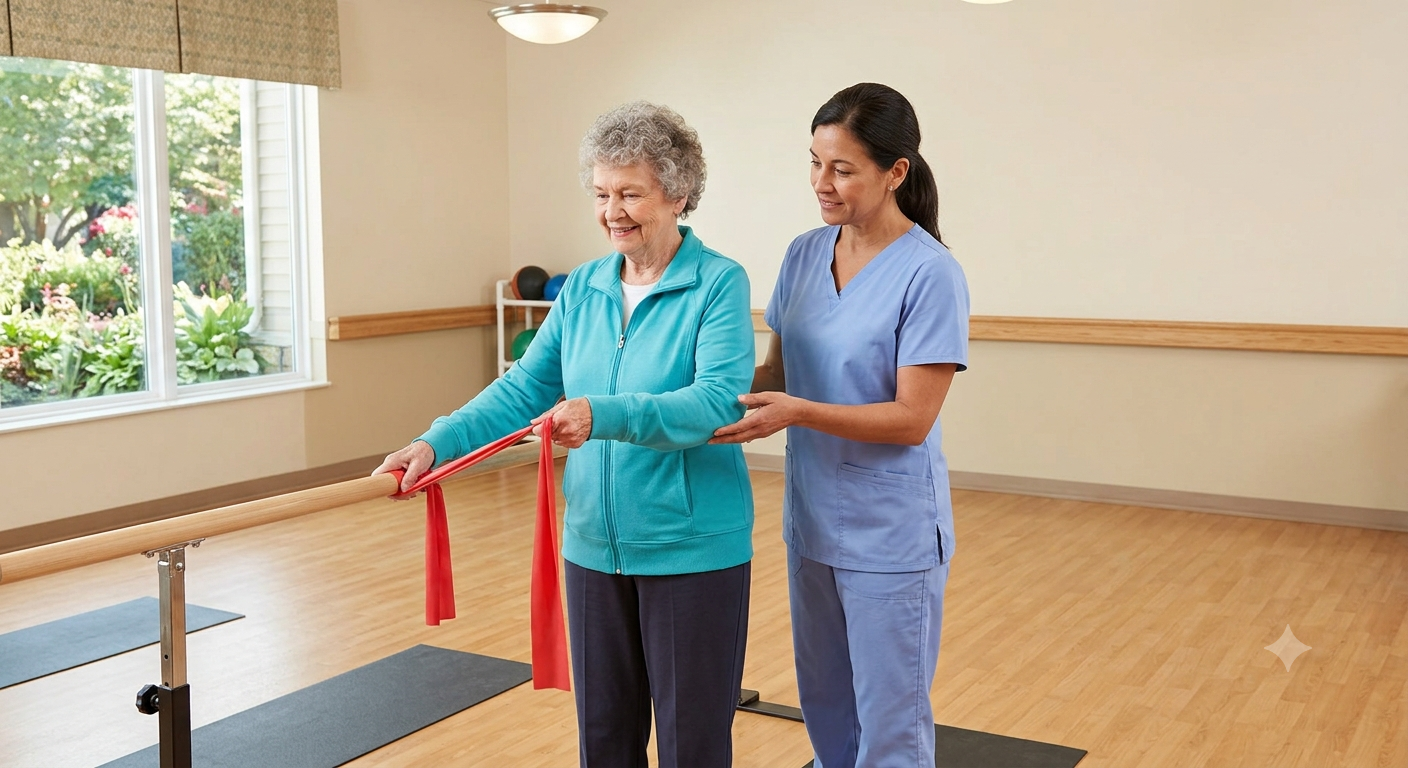
Starting a rehabilitation program brings hope and positive changes for individuals recovering from illness or injury. Many patients feel curious about what happens during physical and occupational therapy exercises for seniors. When you begin your journey, specialized clinicians guide you through targeted routines to rebuild your physical independence. Because every person has unique goals, therapists design custom plans that match individual strength levels. Consequently, patients quickly gain confidence as they master movements that make daily living safer. Furthermore, structured activity builds endurance and reduces the risk of future falls at home.
Understanding Physical Therapy Exercises for Seniors
Physical therapy focuses on restoring overall movement, endurance, and joint function across the entire body. Therefore, targeted therapy exercises for seniors help individuals regain control over fundamental physical movements. First, your therapist conducts a full evaluation to measure your current flexibility and mobility limits. After assessing your needs, they introduce gentle movements to increase circulation and warm up tight muscles. Next, you progress toward specialized strength and stability training that addresses specific areas of weakness. As a result, your body slowly adapts to higher levels of physical exertion over time.
Balance and Coordination Training
Maintaining good balance remains essential for preventing scary falls and accidental slips around the house. For this reason, balance training plays a central role in rehabilitative programs. Patients often practice assisted lunges, standing leg lifts, and squats while holding onto sturdy support bars. In addition, therapists frequently utilize stability balls and specialized balance platforms to challenge core alignment. Because core strength stabilizes the spine, these exercises dramatically improve your physical reaction time. Gradually, patients feel much more steady when standing up or walking across uneven surfaces.
Gait Training and Walking Re-Education
Walking smoothly requires a complex coordination of muscle strength, joint mobility, and neurological focus. Hence, gait training focuses specifically on improving your natural stride and stepping speed. During these sessions, you might practice walking between parallel bars while a therapist guides your posture. Alternatively, clinicians may place you on a cushioned treadmill secured by a supportive safety harness. Moreover, therapists incorporate simple seated marching, toe raises, and heel lifts to strengthen lower leg muscles. Consequently, walking re-education helps you regain full confidence when moving around your local community.
Flexibility and Range of Motion
Stiff joints frequently limit your ability to bend, reach, or turn comfortably throughout the day. So, dedicated range-of-motion routines gently stretch tight tissues to restore natural flexibility. Patients perform simple finger extensions, wrist circles, shoulder rotations, and gentle neck stretches to relieve tension. Because moving joints through their full range stimulates synovial fluid, your stiffness decreases significantly with practice. Furthermore, flexible muscles absorb impact much better, which protects your joints during strenuous activities. In turn, daily tasks like reaching high shelves become far easier to accomplish.
How Occupational Therapy Exercises for Seniors Assist Daily Living
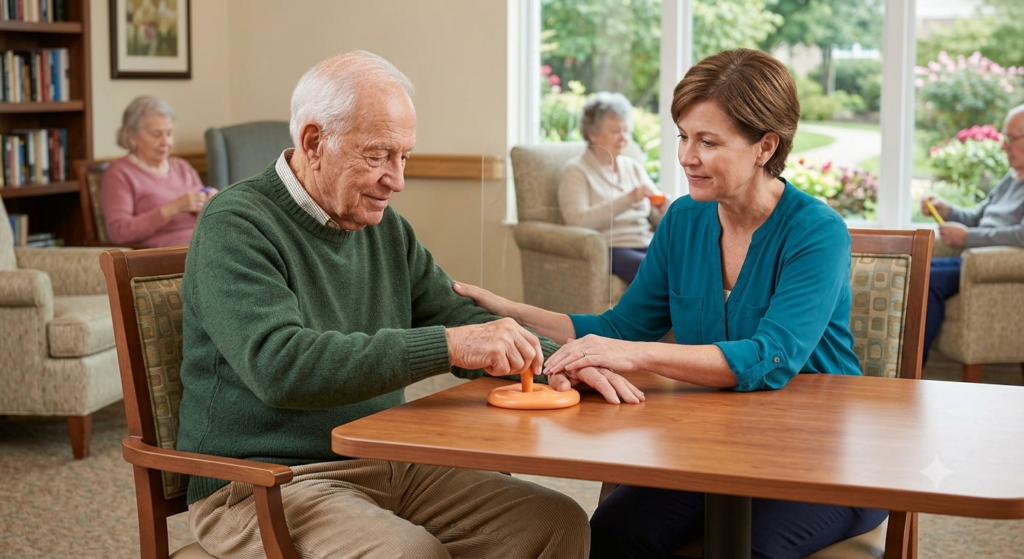
Occupational therapy targets the precise skills needed to perform practical daily self-care routines independently. Naturally, incorporating therapy exercises for seniors into occupational routines helps bridge the gap between clinical care and home life. While physical therapy focuses on underlying body mechanics, occupational care applies those physical gains to practical tasks. Thus, therapists evaluate how well you handle household chores, personal grooming, and kitchen preparation. Through repeated practice in realistic settings, patients re-learn essential habits that promote total safety at home.
Practicing Essential Daily Living Activities
Many modern therapy facilities feature fully furnished simulation areas that mimic real home environments. For instance, you might practice preparing light meals, washing dishes, or getting in and out of a simulated vehicle. Because practicing real scenarios reduces anxiety, patients learn practical strategies for managing energy levels. Furthermore, clinicians closely watch your movements to suggest simpler ways of completing demanding chores. As your coordination improves, you regain the ability to live safely without relying on constant assistance.
Adaptive Equipment Training
Sometimes temporary physical limitations prevent you from performing routine tasks in traditional ways. Therefore, occupational specialists introduce helpful adaptive tools that make everyday self-care manageable. During your sessions, you learn to use long-handled reachers, button hooks, and specialized shoehorns. Likewise, therapists teach you how to utilize adaptive eating utensils, suction plates, and non-slip mats. Because using these tools correctly prevents unnecessary strain, your daily routine becomes much smoother. Consequently, adaptive gear empowers you to maintain personal dignity and privacy at home.
Strength and Endurance Development
Building physical power ensures that your body handles demanding daily activities without sudden exhaustion. For this purpose, therapists introduce light resistance training using soft therapy putty, resistance bands, and hand weights. In addition, practicing functional tasks like lifting groceries or opening heavy doors builds practical grip strength. Because strong hands and arms are vital for independent living, these routines form a core part of care. Over time, increased muscular endurance keeps you active and engaged throughout the entire day.
Cognitive and Spatial Adjustments for Complete Recovery
Rehabilitation extends beyond physical movement to include mental clarity and home safety planning. Indeed, effective therapy exercises for seniors address both mental focus and environmental modifications. Your surrounding environment plays a massive role in determining whether you stay safe after completing treatment. Similarly, cognitive sharpness helps you manage complex daily demands, such as handling medicines or following recipes. Therefore, therapists combine environmental planning with cognitive training to ensure a smooth transition back home.
Functional Cognition and Brain Health
Managing a household requires sharp problem-solving skills, good memory, and steady mental focus. For this reason, occupational programs incorporate functional cognitive challenges alongside physical routines. Patients engage in memory recall games, daily scheduling exercises, and simulated bill-paying activities. Additionally, therapists present practical problem-solving scenarios to sharpen your quick decision-making abilities. Because keeping your mind active builds mental resilience, these exercises support long-term brain health. As a result, you feel fully prepared to handle complex mental tasks independently.
Modifying Your Living Space for Safety
A safe home environment prevents unnecessary injuries and allows you to move freely without worry. Thus, therapists work closely with you to identify potential safety hazards inside your house. For example, clinicians often recommend removing loose throw rugs, clearing cluttered pathways, and improving indoor lighting. Furthermore, installing sturdy grab bars near toilets and showers dramatically lowers your risk of slipping. Because simple spatial adjustments create a secure living area, you can move around with complete confidence.
Breathing and Energy Conservation Techniques
Breathing plays a fundamental role in controlling heart rate, muscle tension, and physical stamina during exercise. Therefore, mastering controlled breathing techniques enhances the effectiveness of all therapy exercises for seniors. Patients practice deep diaphragmatic breathing while sitting, standing, and engaging in physical movement. In addition, therapists teach energy conservation strategies that help you pace yourself during busy days. Because saving energy prevents sudden fatigue, you can enjoy active hobbies without feeling overwhelmed.
Diaphragmatic Breathing Practice
Deep abdominal breathing delivers vital oxygen to working muscles while reducing stress levels throughout the body. During sessions, therapists guide you through slow inhalation techniques that fully expand your lungs. Because controlled breathing stabilizes blood pressure, it helps you manage physical exertion comfortably. Furthermore, practicing deep breaths during challenging exercises keeps your muscles relaxed and efficient. Consequently, proper breathing habits boost your overall endurance during rehabilitation and beyond.
Pacing Strategies for Daily Tasks
Learning to conserve energy allows you to accomplish important goals without draining your physical strength completely. For this reason, therapists demonstrate how to break large household chores into smaller, manageable steps. For instance, sitting down while peeling vegetables or folding laundry saves significant physical energy. Additionally, taking planned rest breaks between active tasks prevents extreme exhaustion late in the day. Because smart pacing keeps your body balanced, you maintain steady strength throughout the week.
Partnering with Specialists for Long-Term Success
Working with compassionate rehabilitation professionals ensures that every routine remains safe and effective for you. Specialized clinicians continually evaluate your progress and adjust therapy exercises for seniors as you grow stronger. Furthermore, team members offer constant encouragement, which keeps your motivation high during recovery. Because structured therapy provides a clear roadmap to wellness, patients achieve meaningful results much faster. Ultimately, dedicated rehabilitative care restores your vitality, independence, and overall quality of life.
Professional therapy teams provide expert care tailored specifically to your unique health goals and personal needs. To discover how customized rehabilitation programs can help you or your loved one regain independence, visit Life Care Center of Fort Wayne today.